
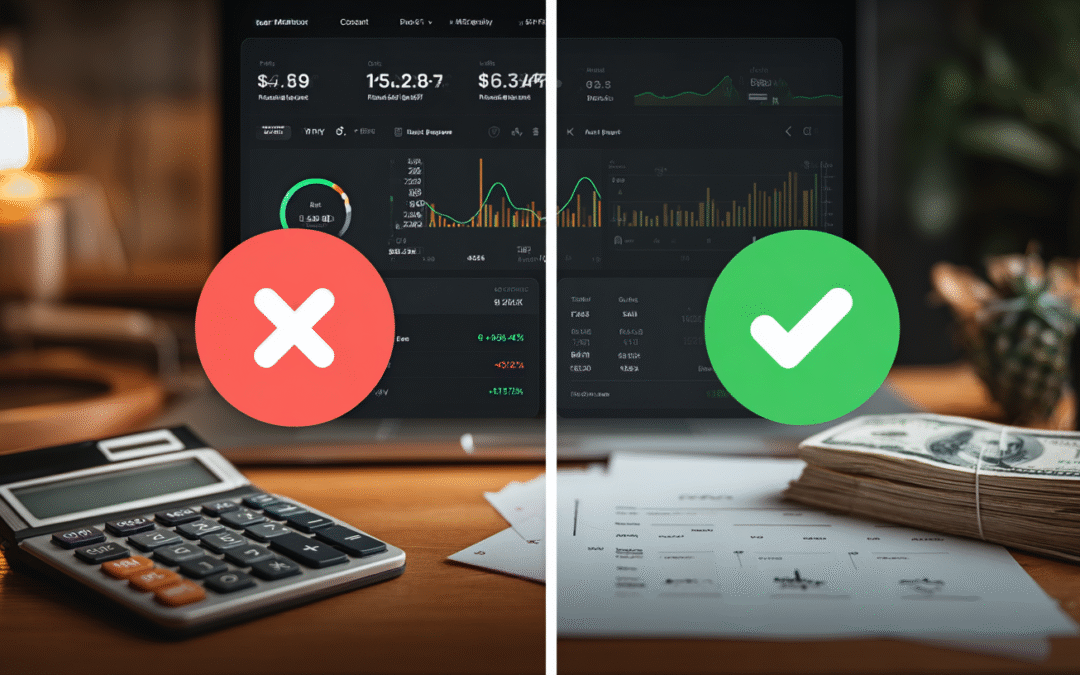
Profit vs. Revenue on Google Ads isn’t just a technical debate — it’s the difference between running a thriving business and bleeding money with a smile.
If that sounds dramatic, good.
Because too many advertisers are high-fiving over six-figure sales while quietly losing their shirts behind the scenes.
Google and Amazon flash revenue like it’s Vegas confetti — but it’s the profit that lets you keep the lights on.
Today, I’m breaking down the profit-first mindset that’s helped my private clients not only survive but scale with their ad campaigns — the same strategies I use in my books and teach at Make Each Click Count University.
Let’s dive in. 👇
🚨 The $100K Revenue Mirage: A True Story
Client hits me up — voice full of excitement:
“Andy, we hit $100,000 in revenue from our Amazon ads last month!”
That’s great, I say.
“How much of that did you keep?”
😶 Crickets.
After we ran the numbers — product cost, ad spend, Amazon fees, shipping, and a few mystery charges — their “amazing” $100K in revenue turned into…
💸 $2,438 in profit.
That’s 2.4% profit margin — barely enough for gas money and a decent burrito. 🌯
They were growing alright — but like a balloon full of hot air and holes.
😵 Why So Many Advertisers Obsess Over Revenue
Let’s call out the three usual suspects:
- 📈 Platform Brag Metrics
Google and Amazon want you to chase revenue. It looks impressive. It feels good. But it’s not the full story. - 👨💼 Agency Smoke and Mirrors
Some agencies push big revenue slides because it’s easier than explaining why your margins are melting. - 🚀 Short-Term Thinking
Revenue = ego. But ego doesn’t pay bills. Profit does.
🧠 What You Should Be Tracking Instead
Let’s cut through the fluff.
If you want long-term success, here’s what you should obsess over:
✅ 1. Net Profit per Order
Know exactly how much you pocket after all costs — including Amazon/Shopify fees, ad spend, shipping, and returns.
✅ 2. Profit Margin (%)
Your margin is your moat. Low margins = no room for mistakes. Aim for 20%+ after ads.
✅ 3. Customer Lifetime Value (CLV)
Can you break even (or lose a little) on the first sale if they buy again? If yes — play the long game.
✅ 4. ROI > ROAS
ROAS looks nice. But ROI is king — because it includes your actual costs. ROI tells you if you’re growing your bank account — or just growing Google’s.
⚖️ Amazon vs. Google Ads: Profit Showdown
Let’s break it down with a common example:
🎯 Amazon Ads Example:
- Product Sale: $50
- Amazon Fees: $15
- Product Cost: $10
- Ad Spend: $20
💥 Profit: $5
🎯 Google Ads Example (Same Product on Shopify):
- Product Sale: $50
- Platform Fees: $3
- Product Cost: $10
- Ad Spend: $10
💥 Profit: $27
Same product. Same price. Way more profit.
Why? Because on Google Ads, you own the sale. On Amazon, you’re renting shelf space in a high-priced mall.
🛠️ Action Steps: How to Shift to Profit-First Advertising
Want to protect your margins? Start here:
- Know ALL Your Numbers
- COGS
- Platform fees
- Ad spend per order
- Shipping & returns
👉 Track daily, not monthly.
- Segment by Profitability
- On Amazon: run separate campaigns for high vs. low margin items
- On Google: use custom labels to group by margin
- Test Smarter ACoS Targets
- Don’t chase low ACoS — chase profitable ACoS
- Use Negative Keywords Like a Bouncer
- Cut out junk traffic that never converts
- Your budget deserves better
- Play the Long Game
- Know your CLV
- Invest in email follow-up
- Track repeat purchases
💥 The Big Lesson
Revenue is loud. Profit whispers.
But if you tune in to the right metrics, the story gets much clearer.
And here’s the real kicker:
Most advertisers burn cash trying to “grow fast” — but the ones who build lasting empires? They measure profit first.
That’s how you scale, sustainably. That’s how you sleep better. 🛌
🔁 Repeatable Proverb:
“Revenue is vanity. Profit is sanity. Cash is king.” 👑
❓ 7 Questions (and Answers) Using Top Amazon PPC Keywords
- What is ACoS in Amazon PPC?
ACoS (Advertising Cost of Sale) = Ad Spend ÷ Sales. But don’t just chase low ACoS — chase high profit margins.
- How do I find profitable products on Amazon?
Use Amazon product research tools and focus on low competition + high margin products.
- How to optimize Amazon PPC campaigns?
Segment campaigns, test ACoS targets, and monitor ROAS weekly — not monthly.
- What are Amazon PPC best practices?
- Start with automatic campaigns
- Mine for converting search terms
- Switch to manual targeting
- Trim the fat with negative keywords
- How to lower Amazon advertising costs?
Focus on keyword relevancy, boost conversion rates with listing optimization, and cut unprofitable campaigns.
- Is Amazon Sponsored Products worth it?
Yes — but only if you know your margins and track profit per SKU. Don’t guess.
- What’s the best Amazon ad strategy for beginners?
Start with a single high-margin product. Track everything. Build from there.
Need Help with Google Ads? If you’re ready to take your online store’s performance to the next level with Google Shopping Ads but need a helping hand, consider reaching out. I’m Andy Splichal, author of Make Each Click Count and host of the Make Each Click Count podcast. Whether it’s about creating high-performing Shopping Ads or mastering your overall Google Ads strategy, I’m here to help. Let’s make those clicks count!
ABOUT THE AUTHOR

Andy Splichal is the founder and managing partner of True Online Presence, author of the Make Each Click Count book series, host of the Make Each Click Count podcast, founder of Make Each Click Count University and certified online marketing strategist with twenty plus years of experience helping companies increase their online presence and profitable revenues.
He was named to Best of Los Angeles Awards’ Most Fascinating 100 List in both 2020 and 2021. To find more information on Andy Splichal, visit trueonlinepresence.com or read The Full Story on his website or his blog, blog.trueonlinepresence.com.