
When most Amazon sellers think about advertising, they immediately think about keywords.
Find a keyword. Bid on it. Show up when a shopper searches for it.
And while keyword targeting is an important part of Amazon advertising, there is another powerful opportunity that sellers often overlook: competitor ASIN targeting.
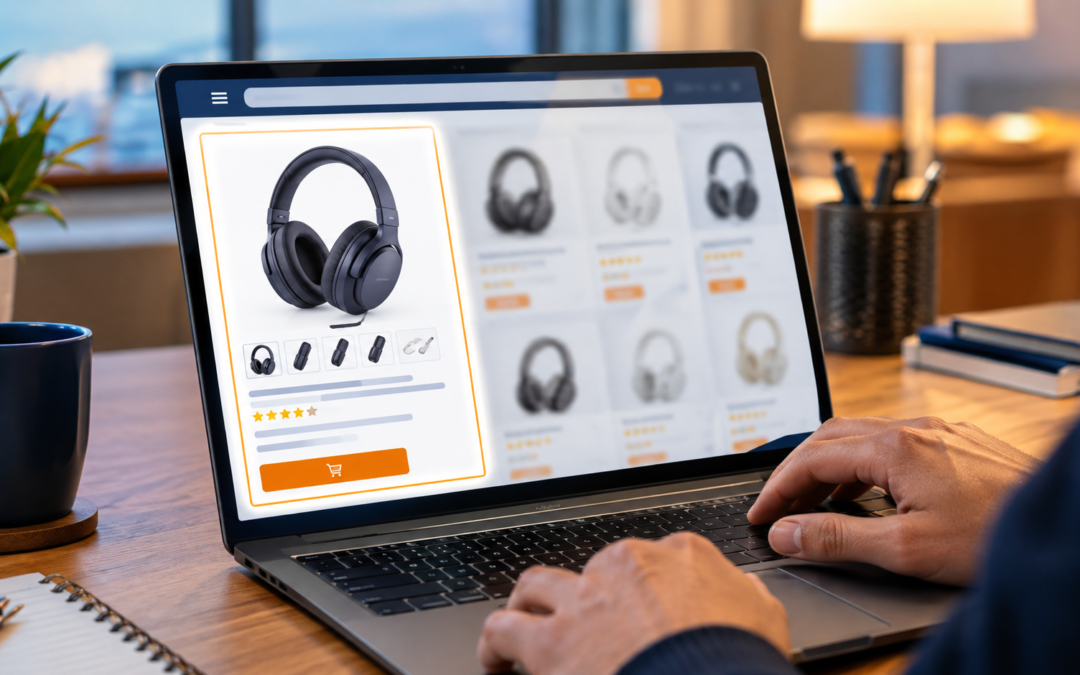
Instead of waiting for shoppers to search for a keyword, you can put your product in front of shoppers who are already looking at a competing product.
That can be an incredibly valuable audience.
So, how can Amazon sellers turn competitor ASINs into new advertising opportunities?
Start by Identifying the Right Competitors
The first step is identifying which competitor ASINs are worth targeting.
And here’s an important distinction: Don’t automatically target the biggest competitor in your category simply because they have the most sales.
You want to identify competitors where you have a legitimate opportunity to win the customer.
For example, imagine you sell a stainless-steel insulated water bottle.
You could target a competitor with tens of thousands of reviews, an enormous sales volume, and a dominant position in the category.
But if your product has only a few hundred reviews, you’re essentially asking your advertising campaign to climb Mount Everest.
Instead, look for competitors with products that are genuinely comparable to yours.
Consider competitors with:
- Similar pricing
- Similar product features
- Similar product sizes
- Comparable customer reviews
- Similar target customers
- Features where your product has a competitive advantage
These competitors may represent much more realistic opportunities.
Give Shoppers a Reason to Choose You
Getting your product in front of a competitor’s customer is only half the strategy.
You still have to give that shopper a reason to leave the competitor’s listing and buy your product.
This is where many sellers make a mistake.
Suppose your competitor has 20,000 reviews and you have 200. Simply showing your product next to theirs doesn’t automatically make your product more attractive.
You need a compelling reason for the shopper to choose you.
Maybe your product is less expensive.
Perhaps you include an accessory that the competitor doesn’t.
Maybe you offer a better warranty.
Or perhaps your product addresses a common complaint customers have about the competing product.
That last one can be particularly powerful.
Don’t just identify your competitor’s weaknesses. Turn those weaknesses into your selling proposition.
Your competitor’s customer reviews can be an excellent source of information here.
Look at what customers love about the competing product—but also pay close attention to what they don’t like.
Those complaints can reveal opportunities for your product, your listing, and your advertising.
Use Competitor ASIN Targeting as a Testing Strategy
You don’t need to start by targeting hundreds or thousands of competitor ASINs.
In fact, I recommend starting much smaller.
Create a manageable list of relevant competitor ASINs and begin testing.
Then pay attention to the data.
Which ASINs are generating impressions?
Which are producing clicks?
Which are producing conversions?
And, most importantly, which are producing profitable sales?
Remember, getting a click isn’t the objective.
The objective is to acquire customers profitably.
That’s a fundamental part of the Make Each Click Count philosophy.
If you discover that several competitor ASINs are consistently producing sales at an acceptable advertising cost, those ASINs deserve more attention.
You can increase your focus and potentially allocate more budget toward those opportunities.
On the other hand, if you’ve spent money targeting a competitor and you’re getting clicks without conversions, that’s valuable information, too.
It may mean that competitor isn’t a good target.
It could mean your product isn’t competitive enough against that particular listing.
Or it could indicate that your own product detail page needs work.
Which brings us to another important point.
Your Advertising Can Reveal Weaknesses in Your Listing
Let’s say you’re targeting competitor ASINs and generating plenty of clicks—but very few sales.
It’s easy to conclude that competitor targeting doesn’t work.
Before you do that, take a close look at your product detail page.
When the shopper arrives, what do they see?
Is your main image compelling?
Is your title clear?
Do your bullet points communicate benefits rather than simply list features?
Do your images clearly explain why your product is different?
Are your reviews strong enough?
Is your pricing competitive?
Advertising can get shoppers to your product page.
But your listing still has to close the sale.
If competitor targeting generates clicks but doesn’t generate conversions, the problem may not be the traffic.
It may be what happens after the shopper arrives.
Segment Your Competitor Targets
Another opportunity is to avoid treating every competitor as the same.
For example, you might have:
- Premium competitors
- Budget competitors
- Products with similar features
- Products that solve the same problem
- Competitors targeting a similar customer
These are different audiences, and they may require different strategies.
Rather than putting every competitor ASIN into one giant campaign, consider creating more targeted campaigns or groups.
This makes it easier to understand which types of competitors are producing results.
It also gives you better control over your advertising budget.
If premium competitors generate strong conversions while budget competitors don’t, that’s an important insight.
You can adjust your strategy based on what the data is telling you.
Use Competitor Advertising to Learn About Your Market
One of the most overlooked benefits of competitor ASIN targeting is that it can provide valuable market research.
Your competitors are already doing a lot of the work for you.
Their product listings can tell you what features they emphasize.
Their pricing can tell you where they position themselves in the market.
Their images can reveal how they communicate value.
And their customer reviews can tell you what shoppers love—and what frustrates them.
In other words, your competitors are giving you market research for free.
Pay attention to it.
For example, if you discover that shoppers repeatedly complain about a particular feature of a competitor’s product, ask yourself:
Can my product solve that problem?
If the answer is yes, you’ve potentially uncovered more than an advertising opportunity.
You’ve uncovered a marketing message.
How to Get Started With Competitor ASIN Targeting
If you’re an Amazon seller who has primarily focused on keyword targeting, don’t overcomplicate this.
Start with five simple steps.
- Identify Relevant Competitor ASINs
Build a list of competitors selling products that are genuinely comparable to yours.
- Prioritize Your Best Opportunities
Look for competitors where you have a meaningful competitive advantage—not simply the largest competitors in the category.
- Create Targeted Campaigns
Keep your targeting organized so you can determine which competitor groups and individual ASINs are producing results.
- Measure More Than Clicks
Track impressions, clicks, conversions, advertising cost, and ultimately profitability.
A competitor ASIN that produces lots of clicks but no sales isn’t necessarily a winner.
- Apply What You Learn
Use the information you gather to improve your product listing, your messaging, your pricing strategy, and your overall Amazon advertising strategy.
The Bigger Opportunity
Competitor ASIN targeting isn’t simply another Amazon advertising tactic.
It’s a way to understand your market.
You’re learning where customers are shopping, which competitors they’re considering, what they value, what frustrates them, and where your product can potentially win.
And that’s what good advertising should do.
It shouldn’t simply spend money.
It should help you discover opportunities.
So if you’re an Amazon seller who has been focused almost entirely on keyword targeting, take a closer look at competitor ASINs.
Your next profitable customer may already be shopping on your competitor’s product page.
You just need to give Amazon the opportunity to put your product in front of them—and then give that shopper a compelling reason to click.
That’s how you Make Each Click Count.
Frequently Asked Questions
- What is competitor ASIN targeting on Amazon?
Competitor ASIN targeting allows Amazon sellers to advertise their products to shoppers who are viewing specific competing products. Instead of targeting a keyword, sellers target an Amazon Standard Identification Number (ASIN), giving their product an opportunity to appear on or around a competitor’s product detail page.
- How do I find competitor ASINs to target?
Start by identifying products that are similar to yours in terms of price, features, audience, and use case. You can research products appearing in your category and search results, then identify competitors where your product has a meaningful advantage. Customer reviews can also help you identify competitors whose customers may have needs your product addresses better.
- Should I target my biggest competitors?
Not necessarily. The largest competitors may have significant brand recognition, thousands of reviews, and strong customer loyalty, making them expensive and difficult targets. Instead, look for competitors where your product has a legitimate opportunity to win the customer. A smaller but highly relevant competitor can sometimes provide a much better advertising opportunity.
- What should I look for when choosing competitor ASINs?
Look for products that are genuinely comparable to yours and where you can offer shoppers a compelling reason to switch. Consider price, product features, reviews, quality, accessories, warranties, and customer complaints. Competitor reviews can be particularly useful for identifying weaknesses that your product can address.
- How do I know if competitor ASIN targeting is working?
Don’t judge a campaign solely by impressions or clicks. Monitor clicks, conversions, advertising cost, and ultimately profitability. An ASIN that generates a large number of clicks but few sales may not be a good target. Conversely, an ASIN that consistently generates profitable sales may deserve additional budget and attention.
- What should I do if competitor ASIN ads generate clicks but no sales?
First, evaluate whether the competitor is actually a good target. Then examine your own product detail page. Your images, title, bullet points, price, reviews, and overall value proposition all influence whether a shopper converts. If you’re getting clicks but not sales, the problem may be what happens after the shopper reaches your listing rather than the advertising itself.
- Can competitor ASIN targeting help me improve my Amazon business beyond advertising?
Absolutely. Competitor ASIN targeting can provide valuable market intelligence. By studying competitors’ listings, pricing, product features, images, and customer reviews, you can identify what shoppers value and where competitors may be falling short. Those insights can help you improve your own product listing, messaging, product offering, and overall Amazon strategy.
Need Help with Amazon Ads? If you’re looking to maximize your Amazon ad returns, sometimes you need an expert who’s been there, done that. I’m Andy Splichal, author of Make Each Click Count and host of the Make Each Click Count podcast. Amazon’s PPC landscape can be overwhelming, but with the right guidance, you can make every dollar count, I’m here to help. Let’s make those clicks count!
ABOUT THE AUTHOR

Andy Splichal is the founder and managing partner of True Online Presence, author of the Make Each Click Count book series, host of the Make Each Click Count podcast, founder of Make Each Click Count University and certified online marketing strategist with twenty plus years of experience helping companies increase their online presence and profitable revenues.
He was named to Best of Los Angeles Awards’ Most Fascinating 100 List in both 2020 and 2021. To find more information on Andy Splichal, visit trueonlinepresence.com or read The Full Story on his website or his blog, blog.trueonlinepresence.com.
