
One of the most common questions I receive from Amazon sellers is:
“How do I know when it’s time to increase my Amazon advertising budget?”
It’s an important question because many sellers assume that spending more on ads will automatically generate more sales. In reality, increasing your budget without first optimizing your campaigns often leads to higher advertising costs without a meaningful improvement in profitability.
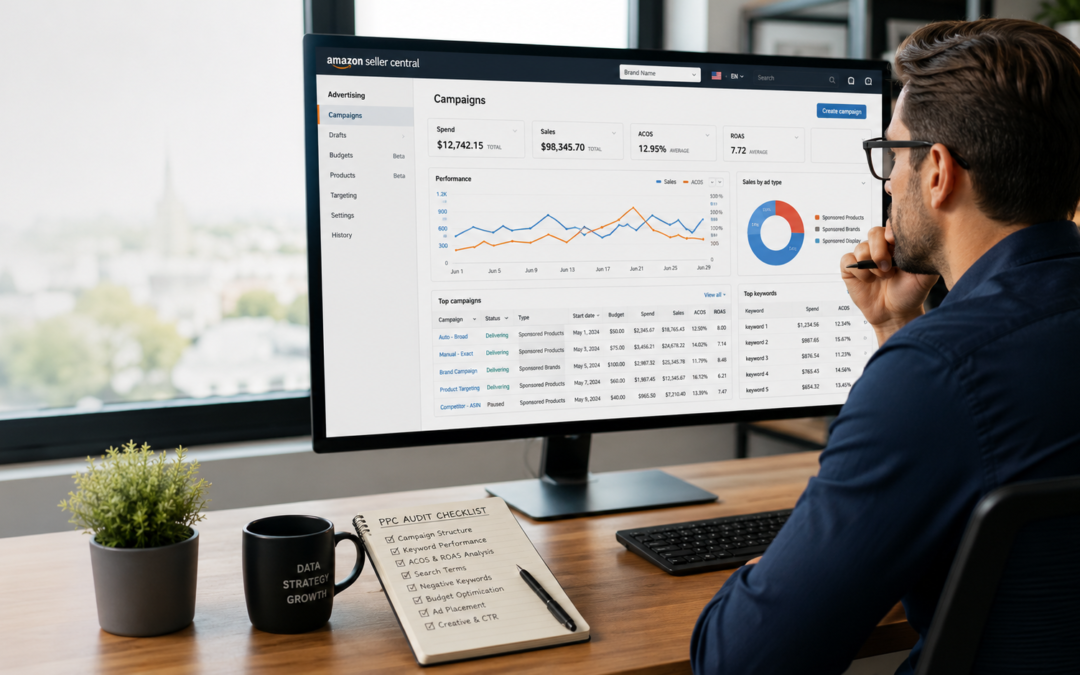
Before recommending that a client scale their Amazon Ads, I conduct a comprehensive account audit. The goal is simple: identify opportunities to improve efficiency before investing additional advertising dollars.
Here are the first ten things I check before scaling spend.
- Determine Whether the Account Is Truly Profitable
The first metric I review isn’t impressions or clicks—it’s profitability.
While sales growth is important, advertising should contribute to the overall health of the business. I evaluate key performance indicators such as Advertising Cost of Sales (ACoS), Total Advertising Cost of Sales (TACoS), conversion rates, and profit margins to determine whether current campaigns are generating sustainable results.
If profitability isn’t where it should be, increasing the budget usually isn’t the right next step.
- Focus Advertising on the Right Products
Not every product is ready for aggressive advertising.
Products with strong customer reviews, healthy conversion rates, competitive pricing, and solid profit margins are typically the best candidates for additional advertising investment.
Products that struggle to convert should often be optimized before receiving additional budget.
- Analyze Keyword Performance
Your search term reports provide valuable insight into customer behavior.
I look for keywords that consistently generate profitable sales while identifying search terms that receive clicks but fail to convert. High-performing search terms may deserve dedicated exact-match campaigns, while poor performers should be evaluated for removal or exclusion.
Regular keyword analysis allows advertising dollars to be directed toward search terms that produce measurable results.
- Eliminate Wasted Spend with Negative Keywords
One of the quickest ways to improve campaign efficiency is by reducing wasted advertising spend.
When search terms repeatedly generate clicks without conversions, they become candidates for negative keywords. Removing irrelevant or low-performing traffic helps improve overall return on ad spend while allowing more of the budget to be allocated toward qualified shoppers.
Small optimizations like these often produce meaningful improvements over time.
- Review Campaign Structure
Campaign organization matters more than many advertisers realize.
A well-structured account makes it easier to evaluate performance, adjust bids, and identify optimization opportunities. Campaigns should be organized logically based on products, targeting strategies, or advertising objectives.
A clean account structure creates better visibility and simplifies ongoing management.
- Identify Budget Limitations
Sometimes successful campaigns simply run out of budget before the day ends.
If profitable campaigns consistently exhaust their daily budgets, additional funding may generate incremental sales without requiring significant optimization.
Rather than increasing budgets across every campaign, I prioritize campaigns that have already demonstrated consistent profitability.
- Evaluate Bid Strategy
Bidding strategy has a direct impact on advertising efficiency.
I review keyword bids, placement adjustments, and Amazon’s bidding settings to determine whether bids are appropriately aligned with campaign performance.
The objective isn’t necessarily to bid higher. Instead, it’s to bid strategically based on actual performance data and business goals.
- Optimize Product Listings
Advertising can drive traffic, but product listings ultimately determine whether shoppers make a purchase.
Before increasing advertising spend, I review each listing’s:
- Product title
- Images
- Bullet points
- Product description
- A+ Content
- Product videos
- Customer reviews
- Pricing
Even modest improvements to a listing can significantly increase conversion rates, allowing advertising dollars to produce better returns.
- Confirm Inventory Availability
Scaling advertising without sufficient inventory creates unnecessary risk.
Running out of stock can interrupt sales momentum, negatively affect organic rankings, and reduce the long-term effectiveness of your advertising efforts.
Before increasing budgets, verify that inventory levels and supply chain planning can support additional demand.
- Review Overall Performance Trends
Finally, I step back and evaluate the account as a whole.
Instead of focusing on short-term fluctuations, I examine long-term performance trends, including:
- Conversion rate improvements
- TACoS performance
- Organic sales growth
- Customer acquisition trends
- Overall profitability
Consistent improvement over time provides much greater confidence when making scaling decisions than isolated periods of strong performance.
Scaling Successfully Starts with a Strong Foundation
Increasing your Amazon advertising budget should never be the first step. It should be the result of a disciplined optimization process.
When campaigns are profitable, listings convert effectively, wasted spend has been minimized, inventory is available, and account performance demonstrates consistent growth, increasing advertising investment becomes a much more strategic decision.
Successful Amazon advertising isn’t about spending more money. It’s about investing your advertising budget where it has the greatest opportunity to generate profitable growth.
Final Thoughts
Every Amazon account has opportunities for improvement. Conducting a regular advertising audit helps uncover inefficiencies, prioritize optimization efforts, and position your business for sustainable growth.
Before increasing your advertising budget, take the time to review these ten areas carefully. Addressing even a handful of issues can significantly improve campaign performance and help ensure that additional advertising dollars produce stronger returns.
The most successful Amazon advertisers don’t simply spend more—they continually analyze, optimize, and refine their campaigns to make every advertising dollar work harder.
Frequently Asked Questions
- When is the right time to increase my Amazon advertising budget?
The best time to increase your Amazon advertising budget is after you’ve confirmed that your campaigns are consistently profitable. Before scaling, review key metrics such as ACoS, TACoS, conversion rate, and overall profitability. If your top-performing campaigns are generating strong returns and are limited by their daily budgets, increasing spend may help drive additional sales.
- What metrics should I review before scaling Amazon Ads?
Several metrics are important, including Advertising Cost of Sales (ACoS), Total Advertising Cost of Sales (TACoS), click-through rate (CTR), conversion rate (CVR), cost per click (CPC), return on ad spend (ROAS), and overall profitability. Looking at these metrics together provides a more complete picture of campaign performance than relying on a single number.
- Why are negative keywords important for Amazon advertising?
Negative keywords help eliminate wasted ad spend by preventing your ads from appearing for search terms that are unlikely to generate sales. Regularly reviewing your search term reports and adding irrelevant or consistently underperforming keywords as negatives can improve campaign efficiency and increase your return on investment.
- Should I optimize my product listings before increasing my ad budget?
Yes. Even highly targeted advertising campaigns can underperform if your product listings fail to convert visitors into buyers. High-quality images, compelling titles, informative bullet points, A+ Content, competitive pricing, and strong customer reviews all contribute to higher conversion rates and better advertising performance.
- How often should I perform an Amazon Ads audit?
Most sellers benefit from conducting a comprehensive account audit at least once a month. However, if you’re actively managing campaigns with significant advertising spend or launching new products, reviewing campaign performance weekly can help identify optimization opportunities before they become costly.
- Can increasing my advertising budget hurt profitability?
It can. Increasing your budget without first optimizing campaign structure, keyword targeting, bids, and product listings may simply increase your advertising costs without generating enough additional sales to maintain profitability. Scaling works best after you’ve established a strong, efficient foundation.
- What is the biggest mistake sellers make when scaling Amazon Ads?
One of the most common mistakes is increasing budgets too quickly without analyzing account performance. Successful scaling involves more than spending more money—it requires profitable campaigns, effective keyword management, optimized product listings, sufficient inventory, and ongoing performance monitoring to ensure long-term growth.
Need Help with Amazon Ads? If you’re looking to maximize your Amazon ad returns, sometimes you need an expert who’s been there, done that. I’m Andy Splichal, author of Make Each Click Count and host of the Make Each Click Count podcast. Amazon’s PPC landscape can be overwhelming, but with the right guidance, you can make every dollar count, I’m here to help. Let’s make those clicks count!
ABOUT THE AUTHOR

Andy Splichal is the founder and managing partner of True Online Presence, author of the Make Each Click Count book series, host of the Make Each Click Count podcast, founder of Make Each Click Count University and certified online marketing strategist with twenty plus years of experience helping companies increase their online presence and profitable revenues.
He was named to Best of Los Angeles Awards’ Most Fascinating 100 List in both 2020 and 2021. To find more information on Andy Splichal, visit trueonlinepresence.com or read The Full Story on his website or his blog, blog.trueonlinepresence.com.
